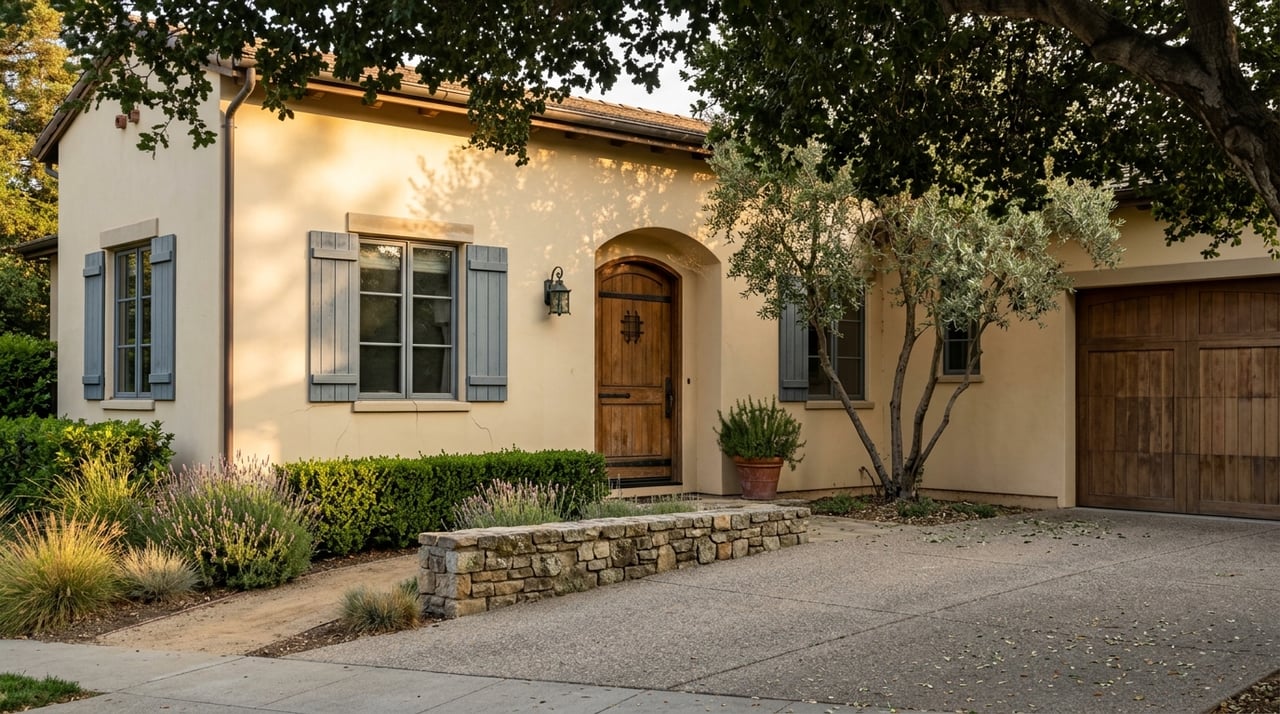
A listing agent recently ran a promotion on a home inside Silverado Country Club: buy before year-end, and the seller throws in a complimentary club membership transfer. On paper that reads like a nice bonus, the kind of thing you'd expect with a hot tub or a wine fridge. In practice, it is a seller quietly absorbing a cost that most buyers researching Silverado from outside never see coming, because it does not live on the listing sheet, the Zestimate, or the median price headline. It lives in the club's own membership rules, and it can run into six figures depending on timing.
If you've been comparing Napa Valley communities using median sale price alone, Silverado is where that habit breaks down fastest.
The house and the membership are two separate transactions
Every parcel inside the roughly 1,200-acre Silverado Residential Community carries what the club calls an appurtenant membership, meaning the right to join is attached to the property itself rather than sold freely on the open market. That sounds like a formality until you look at what happens at closing.
A new owner has 30 days from close of escrow to pay a transfer fee if the prior owner kept the membership in active, transferable status. Miss that window, or buy a property where the membership had already lapsed, and the appurtenant right reverts to something the club calls potential status. At that point the only way back in is a full initiation fee, which the club's own real estate guidance and property specialists have put at roughly $90,000, more than double the standard transfer fee of about $40,000.
That gap is the number missing from every median-price conversation about Silverado. Two houses can sell for the same price on the same street and represent two entirely different total costs depending on whether the seller kept the membership current.
| Path to membership | Approximate cost | Trigger |
|---|---|---|
| Transfer an active membership | ~$40,000 | Must be paid within 30 days of close of escrow |
| Initiate a new membership | ~$90,000 | Required if the appurtenant membership had lapsed or was never activated |
Activation itself is optional. A buyer can pay the transfer fee to preserve the membership's viability without ever using the golf courses, tennis programs, or spa, and can activate later. What is not optional is the clock. Once that 30-day window closes without payment, the discount disappears permanently for that owner and every owner after, until someone pays the full initiation fee.
Why sellers are starting to advertise the transfer as a perk
Once you understand the fee structure, the "complimentary membership transfer" offer stops looking like a marketing flourish and starts looking like a rational response to a real friction point. A seller who keeps the membership active and pays the transfer fee on the buyer's behalf is effectively removing a five-figure decision from the closing table, at a moment when many buyers are already stretched by the purchase price itself.
It also explains something else in the data: homes at Silverado have consistently taken longer to sell than the broader market. Recent listing snapshots through the first half of 2026 have shown Silverado properties spending anywhere from roughly ten weeks to nearly four months on market, well above the 50-something day national average reported for comparable listings. Slow-moving inventory has plenty of causes in any luxury market, but a membership decision worth tens of thousands of dollars, with a hard deadline that starts ticking only after the buyer already owns the house, is exactly the kind of friction that stalls a transaction between offer and close rather than before it.
Nine communities, one gate, different eras of construction
Part of what makes this worth sorting out before you write an offer is that Silverado is not one homogenous product. The development contains nine distinct residential communities, each with its own homeowners association layered on top of the club membership question: Silverado Highlands, Silverado Springs, Silverado Crest, Silverado Oaks, The Villas, Creekside, Oak Creek East, The Grove, and the Fairways condominiums.
The age spread matters. Creekside was built in 1969 and was one of the first residential communities on the property. Silverado Springs followed two decades later, built in 1989 and 1990. The condominium communities, Oak Creek East, The Grove, and the Fairways, were designed with separate bedroom entrances specifically so units could be placed into the resort's rental program, a detail that also means many of them carry exterior decks and walkways built to a different era's code than anything going up in Napa today.
That construction era is about to matter in a way it hasn't before.
What changed for condo buyers on January 1
California's Senate Bill 410 took effect January 1, 2026, and it closes a gap that used to let HOA balcony inspection reports stay buried in records requests. Under the amended Civil Code section 4525, any association covering attached condominiums must now include the most recent exterior elevated element inspection report, covering balconies, decks, stairways, and walkways built substantially of wood, directly in the resale disclosure package handed to prospective buyers. That report has to state the total number of qualifying elements, how many were inspected, and how many showed signs of immediate structural concern.
For a buyer looking at Creekside or Oak Creek East, both older condominium stock with wood-framed decks central to their design, this is not an abstract compliance note. It is a document that should already exist and should already be in your hands before you remove inspection contingencies. If it does not exist yet, that absence is itself something a careful buyer's agent will flag, since the underlying inspection law has technically been in force since 2025 and any association still without a completed report is already behind schedule.
The membership question is separate from the HOA question
One more distinction worth making before you write an offer at Silverado: the club membership and the neighborhood's homeowners association are not the same organization asking for the same money. The Silverado Property Owners Association, known locally as SPOA, exists to protect property values and handle matters like architectural review and wildfire mitigation planning across the residential community. It has no authority over golf, tennis, or spa access. Those live entirely inside the club's own membership structure, run separately from SPOA and billed separately from any individual condo association's dues.
A buyer who assumes that paying HOA dues means membership is included, or that a homeowners association fee somehow covers the transfer or initiation cost, is combining two ledgers that Silverado itself keeps apart. If you are not planning to use the club at all, you can decline to activate the membership indefinitely and simply pay whatever your specific sub-community's HOA charges for its own pools, common areas, and front-yard landscaping, since several of Silverado's associations maintain front yards on the owner's behalf while leaving backyard upkeep to the homeowner.
None of this makes Silverado a harder place to live. Residents still walk to Jessel Gallery for art classes, grab a bite at The Grill or the Silverado Market & Bakery, and drive four miles into downtown Napa for the rest of it. What it does mean is that the median price you see on a portal search is describing the house, not the full cost of the life that comes with it. The membership decision is a second transaction sitting quietly inside the first one, with its own deadline and its own math.
Frequently asked questions
Does every home at Silverado come with an active club membership? No. Membership rights are appurtenant to the property, but whether that membership is currently active or has lapsed into potential status depends entirely on what the seller did before listing. This is a question to ask directly, not assume.
Can I decide not to join the club at all? Yes. Activation is not required to own property inside Silverado. You are still responsible for your specific sub-community's homeowners association dues regardless of whether you ever activate club membership.
Does the new balcony inspection law apply to single-family homes at Silverado? No. Senate Bill 410's resale disclosure requirement applies to attached condominium associations with qualifying exterior elevated elements. It is most relevant to buyers looking at Silverado's condominium communities like Creekside, Oak Creek East, The Grove, and the Fairways, not the detached single-family homes in Silverado Highlands or Silverado Springs.
If you're weighing a purchase inside Silverado Country Club and want the membership status, HOA structure, and disclosure paperwork sorted out before you write an offer, reach out to Avi Strugo. Get in Touch With Avi.